
Mririda n’Ait Attik: The Poetess Who Refused to Be Tamed
The story of Mririda n’Aït Attik begins in the high peaks of the Haut Atlas, in the valleys cut by the cold waters of the Tassaout River. She was an Amazigh poetess from Morocco whose voice is still remembered today. Her story involves passion, a refusal to submit to servitude, and a great deal of mystery. Even her real name remains unknown. The name by which she is remembered, Mririda, is widely understood to have been a nickname rather than the name given to her at birth.
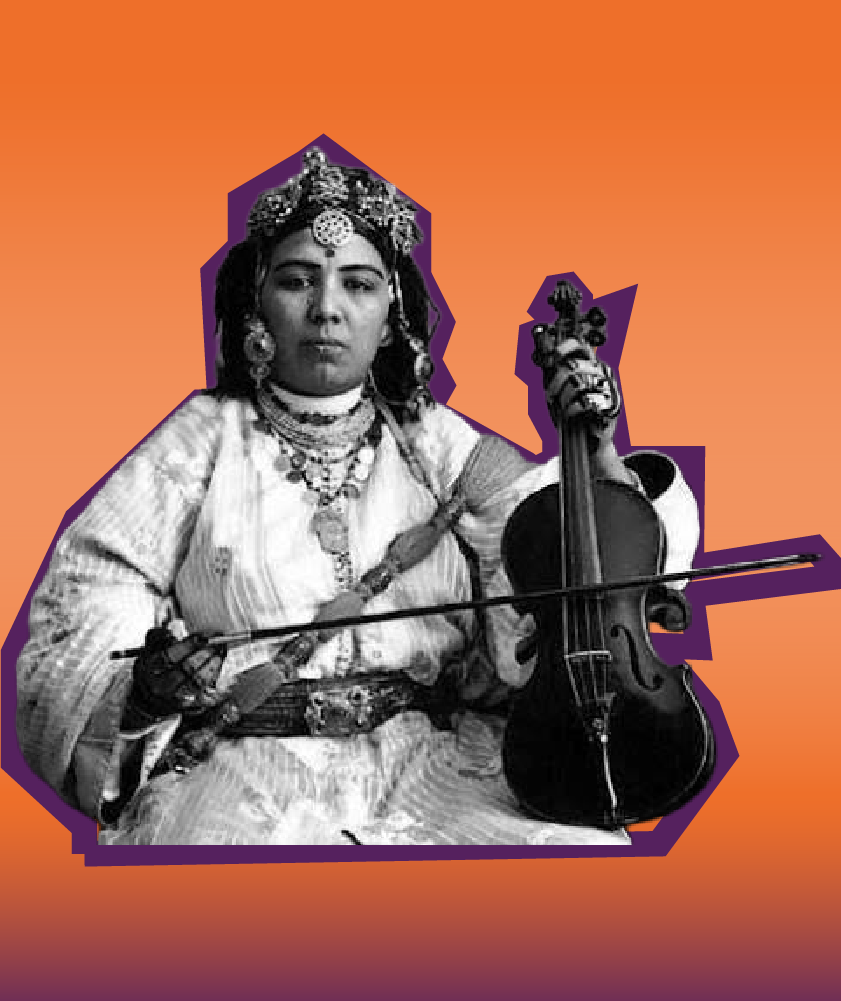
To understand this important and controversial figure, we must go back to the 1920s. The legend starts in the village of Magdaz, in the Tassaout valley in the Azilal region. She was called Mririda, a poetic nickname. Like many women of her time, she did not possess the social status of the powerful leaders who dominated public life. People who knew her described her face as rough and aged early by the harsh mountain wind, but lit up by very large, captivating eyes. She was not born rich, but she possessed a powerful gift for words.
She could neither read nor write and had no formal education. However, her command of Tachelhit was remarkable. She was a true ‘taneddamt’—a poet and public speaker from the ancient oral tradition of the Amazigh regions. She could improvise verses with deep philosophical meaning and sharp, daring criticism.
At that time, a woman's life in the Haut Atlas was largely predetermined: rural poverty, early marriage, and exhausting work in the fields under strict patriarchal control. Mririda chose a different path. She left her parents' homeland and moved to the Azilal market town, where she became a courtesan—a sought-after companion. But unlike women who were forced to submit, she always maintained control. She selected her own lovers, negotiated her time, and only allowed intimacy with men she considered worthy of entering her home.
One day, a French schoolteacher and administrative officer with a strong interest in ethnography named René Euloge met Mririda. Euloge was fascinated by Amazigh culture in southern Morocco and spoke Tashelhit fluently. He became captivated by this extraordinary poetess. Following their encounter, Euloge recorded her songs and poems in 1927, translated them into French, and preserved them in writing. More than three decades later, in 1959 (Osire Glacier, 2013, p. 143), he published these translations, introducing Mririda's poetry to a wider readership. Euloge immersed himself in her melodies and listened carefully to the rhythm of her words. He was deeply attracted to this artist who sang about love, pain, and rebellion. He took his notebook and translated her work from Tachelhit into French. This would become the only surviving record of her memory: a collection titled Les Chants de la Tassaout (The Songs of the Tassaout).
Beyond their literary value, these poems offer a rare insight into the social realities faced by women in the High Atlas during the first half of the twentieth century. Throughout her verses, Mririda repeatedly critiqued the conditions imposed upon women and exposed the inequalities that structured everyday life. She is frequently described in the literature as a sex worker (Osire Glacier, 2013, p. 144), a status that informed some of her sharpest social observations. Far from accepting the stigma attached to her profession, she denounced the double standards that condemned women while excusing the men who sought their services.
One of the clearest examples appears in the poem The Bad Lover, where she addresses a goumier who insults and humiliates her after their encounter. The poem reverses conventional power relations by revealing the man's dependence on her and exposing the hypocrisy of his moral judgement:
The Bad Lover
Go away, goumier, without sense or manners!
You may show all the contempt you like,
Your hand raised, insults on your lips,
Now that you have taken everything from me.
And you leave, calling me a bitch!
Satisfied, you would make me ashamed of my trade.
And you, were you ashamed, standing proud as a bull,
When you gently pushed open my door?
Did you come to my house to play cards?
You made yourself humble and submissive, goumier,
Accepting in advance all my demands,
Even losing your entire prêt-franc pay.
And the more your gleaming eyes roamed over me,
The more your brutal desire placed you at my mercy...
When you finally discovered my flesh,
I could have demanded your soul,
And made you curse your mother and your ancestors!
To what heaven of bliss had you flown?
Now calmed, here you are back on earth,
Arrogant, rough, and coarse as your djellaba.
Poor guest of a moment, my slave,
Can you not feel my disgust and my hatred?
One evening, the memory of this night
Will bring you back to me, defeated and submissive.
Your pride will remain on the threshold,
And I shall laugh at your glances and your prayers.
But then I shall demand three times tonight's price;
That will be the penalty for your pride and your insults.
And I shall be no more aware of your embrace
Than a river is aware of a drop of rain.
Mririda n’Ait Attik, trad. René Euloge. Les chants de Tassaout (Marrakech: Éditions de la Tighermt, 1959).
In this poem, the speaker refuses shame and instead portrays the client as morally compromised. Mririda considered the social condemnation directed at prostitutes to be profoundly hypocritical, arguing implicitly that if prostitution were to be condemned, equal blame should be assigned to those who relied upon it (Osire Glacier, 2013, p. 146). Her poetry therefore challenges not only gendered forms of domination but also the moral hierarchies through which respectable masculinity was constructed.
The poems also suggest that Mririda had personal experience of marriage before becoming independent. According to Euloge's account, she had been married and later repudiated (Osire Glacier, 2013, p. 147). One poem evokes the moment when she realizes that her husband has come to reject her:
And my mother began to weep
When he entered with my father,
When he sat for a while in the shadows,
I knew what he had come to tell me.
But what of it! Many others besides me,
Many others have been repudiated
Mririda n’Ait Attik, trad. René Euloge. Les chants de Tassaout (Marrakech: Éditions de la Tighermt, 1959).
This experience appears to have profoundly shaped her understanding of marriage and women's status within it. In several poems, marriage is represented less as a romantic union than as a social institution that restricts women's autonomy and reduces them to domestic labour and childbearing, particularly the production of sons (Osire Glacier, 2013, p. 147). Rather than viewing marriage as a path to fulfilment, Mririda frequently presents it as a form of confinement that deprives women of freedom and self-determination.
In these texts, Mririda expressed her deep rejection of forced marriage and restrictive moral conventions. When a naive young suitor thought he could possess her soul and tame her wandering spirit by offering her a conventional married life, she dismissed him directly and with sharp irony, declaring that her independence could not be violated:
Poor, naïve young man, stop pestering me!
I came home to see my parents again,
Not to look for a husband, God forbid,
And soon I shall return to Azilal, God willing…
The favour I granted you for a single night Has so thoroughly turned your head That, without a trace of humour, you ask me to be your wife…
What could you possibly offer me In exchange for my freedom?
Mririda n’Ait Attik, trad. René Euloge. Les chants de Tassaout (Marrakech: Éditions de la Tighermt, 1959).
In the streets of Azilal and at the valley markets, she openly spoke out against injustice. She spared no one. She criticized the abuse of power by local caïds, mocked the arrogance of notables, condemned the brutality of local men, and fiercely attacked the submission imposed by the French occupiers. She sang about the wounds of abandoned women, physical deprivation, and the pain of isolation. She defied social puritanism with deliberately crude language, sometimes bordering on obscenity, in order to express the raw truth of female desire.
Yet beneath her rebellious and defiant exterior, there was a deep nostalgia for her homeland. She felt a quiet sadness from being far from her family and from the impossible search for a pure and respectful love. In the silence of her lonely nights, far from the mountains of Magdaz, she expressed quiet regret. She dreamed of a tenderness that no man of her time had been able to offer her, and she mourned the gap between what her heart wanted and the harsh reality of her profession:
They nicknamed me Mririda,
Mririda, Mririda,
The nimble little frog of the meadows.
I do not have, I do not have her golden eyes.
I do not have, I do not have her white throat.
I do not have, I do not have her green tunic.
But what I do have, like Mririda,
Are my zerarit, my zerarit,
Which fly all the way to the shepherds' fold,
Are my zerarit, my zerarit,
Spoken of throughout the valley,
And beyond the mountains…
Mririda n’Ait Attik, trad. René Euloge. Les chants de Tassaout (Marrakech: Éditions de la Tighermt, 1959).
Then history took a sudden turn. Forced to leave Morocco for an extended period, René Euloge was separated from the Atlas Mountains for a few years. When he finally returned, hoping to find his muse and tell her about the success of her published work, Mririda had vanished. She had disappeared without a trace.
Euloge searched tirelessly. He traveled the rocky paths of the Haut Atlas, questioned villagers in the douars, looked through makeshift camps, and explored the red-light districts of major cities, all the way to Casablanca. Everywhere he went, he met only a cold wall of silence.
No civil registry record, no official document, and no inscribed grave has ever confirmed how her life ended. Her sudden disappearance led to many theories. Was she the victim of an honor killing carried out by her own family to erase the shame of her free lifestyle and her relationship with a Christian man? Was she executed by resistance fighters who saw her as a traitor because she was associated with colonial officers? Did she die at the hands of a jealous, rejected lover? Or did she simply fade away in poverty and anonymity in a remote village, worn down by illness and time?
The mystery remains unsolved. This has elevated Mririda to the status of an enduring myth.
Beyond the tragic fate attributed to the woman herself, a deeper question remains in Moroccan cultural memory. Mririda n’Aït Attik is known largely through René Euloge, the French colonial administrator who recorded and translated the poems associated with her in the 1930s. Because the original Tashelhit versions and independent contemporary accounts are scarce or unavailable, her voice reaches us through a complex process of transcription, translation, and colonial mediation.
Some contemporary critics, such as the curator and art critic Syham Weigant (2025), offer a compelling and unsettling interpretation. Mririda may have been a composite figure—a poetic invention created by René Euloge to give a single face and voice to a body of oral songs passed down through generations of Berber women. Euloge, fascinated by the richness of Amarg—the ancestral poetry that combines love, suffering, and social protest—may have collected fragments of verses from many anonymous women poets in the valley and merged them into one tragic, romantic icon. Euloge was no stranger to literary games and mystification. He had previously created other elaborate, fiction-filled narratives.
There may be a significant gap between the Tachelhit spoken in the heights of Magdaz and the elegant French of Euloge's translation. Are we hearing the authentic voice of the women of the Haut Atlas? Or are we hearing the orientalist filter of a European man who may have wrapped local folklore in the attractive packaging of a colonial legend?
Whether Mririda was a real woman erased by the conservatism of her time, or a brilliant poetic creation born from the mind of a man passionate about the mountains, she represents an undeniable truth: the voice of Berber women carries universal power. This oral heritage—this matrimoine—has a raw strength that goes beyond the question of whether it can be documented as historically authentic.
A century later, the shadow of Mririda has lost none of its relevance in contemporary Morocco. Her life and her poetry resonate strikingly with the struggles that run through Moroccan society today. The challenges she once faced in the dust of the mountain souks—the fight for bodily autonomy, the denunciation of violence against women, the refusal of patriarchal control, and the rejection of forced marriages—are at the very heart of the demands made by today's feminist movements in the Kingdom. Across the country, women continue to fight for equal rights, for reform of the Family Code, for economic emancipation, and for an end to gender-based discrimination. The verses of the poetess of the Tassaout thus appear as an early manifesto, proving that the quest for freedom by Moroccan women is not a foreign import. It is a deep root, anchored in the darkest soil and rocks of the Atlas for centuries.
Moreover, Mririda's fate symbolizes the contemporary struggle for the recognition, preservation, and rehabilitation of Amazigh culture and language. For decades, this oral memory—carried by women who were often illiterate but held immense poetic knowledge—was pushed to the margins of official history. Mririda's story is a reminder of the urgent need to honor this intangible heritage, to place Tachelhit and Amazigh artistic creation at the center of the national patrimony, so that the voices of the past are never again forgotten or silenced.
And so the mystery remains. But perhaps the real mystery is not what happened to Mririda. It is what has happened to us. What do young Moroccan women see when they read her poetry today: a symbol of liberation, a cautionary tale, or something in between? Have the conditions that constrained her disappeared, or have they merely taken new forms? How many women still negotiate daily between personal freedom and social expectations, between desire and respectability, between self-determination and family obligations? If Mririda were to walk through the streets of Moroccan cities, would she finally be understood, or would she still be asked to explain herself?
Sources:
Glacier, O. (2013). Femmes politiques au Maroc d'hier à aujourd'hui: La résistance et le pouvoir au féminin. Tarik Éditions.
Mririda n’Ait Attik. (1959). Les chants de Tassaout (R. Euloge, Trans). Éditions de la Tighermt.

Related resources