


“I’m Still Ready”: The Courage and Legacy of Saadia Bouhaddou
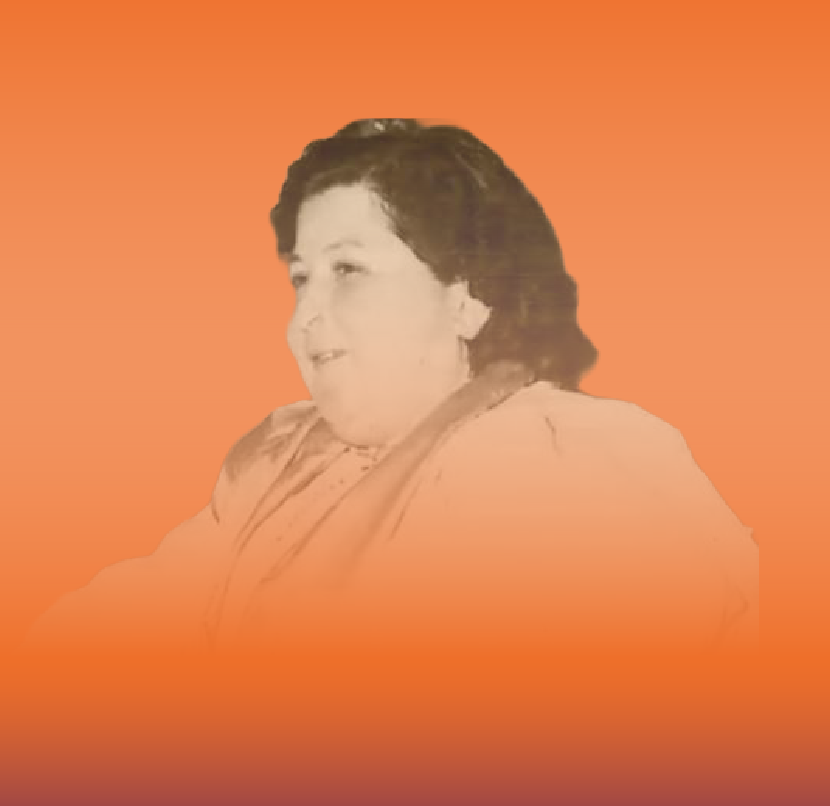
In a bustling room organized by the Casablanca delegation of the High Commission for Veterans of the Resistance, women gathered around a large table, taking turns with a microphone to reclaim their histories. Amidst the applause, passionate interruptions, patriotic songs, and shared laughter, Saadia Bouhaddou stood out as a woman who had carried the quiet, lethal burdens of Morocco’s independence struggle.
Born in 1934, Saadia’s early life was marked by hardship and isolation. Raised by a strict stepmother and a fqih father who taught her the Koran at home, her childhood was cut short when she was married off at just ten years old to a thirty-five-year-old man—as his seventh wife. "I was only ten years old, my girl! I didn't know the man; it was my father who made me get married in spite of my wishes. I did everything I could to leave him. I wanted to get an education" (Baker, 1998, p. 193) she recalled. By seventeen, after enduring physical abuse, the tragic deaths of two of her young children, and a final miscarriage, she achieved her divorce and took control of her fate, finding work as a nurse with Dr. Ouerzazi.
Awakening and the Oath
The turning point of Saadia’s life arrived in August 1953, when Sultan Mohamed V was forced into exile by French colonial authorities. The event stirred something deep within her:
"When Mohamed V was taken away, I was roused by the nationalist spirit. I didn't know what to do anymore... They used to come to us there at the clinic, at Dr. Ouerzazi's. All of the members of the resistance organizations came there to have bullets removed and to be taken care of. But I didn't dare tell anyone that I wanted to do anything." (p. 183).
Her determination soon drove her to act independently. Spotting a man who had confronted someone for smoking French-manufactured merchandise, she pursued him through the streets. Despite his suspicion, she refused to back down, following his instructions into a movie theater and out through the exit. "What did I say to myself? 'The bullet will come and hit me in the head; the bullet will hit me in the head because I've gone too far; I've overstepped the bounds of curiosity,'" (p. 186) she remembered thinking. When he turned to ask what she wanted, her answer was unwavering: "I too want to fight for my country. I haven't been able to sleep thinking about it." (p. 187). That meeting led her to take an initial oath in a garage and eventually brought her into the Secret Organization for the Victory of Mohamed V. Bound by a sacred promise to God, nation, and king above all personal ties, Saadia was integrated into the clandestine network. Yet passive participation was never her goal. Inspired by armed women in the Algerian war of independence, she challenged her president: "As for me, when I saw women wearing jewelry, that didn't do anything for me. But when I saw women carrying machine guns, I trembled with excitement." (p. 187).
The Guardian of Arms
Saadia soon transitioned into a central operational role. Asked to leave her clinic job to go into active combat, she moved into a safehouse alongside resistance fighters, including Bouchaib El Ghazi, acting as the official guardian of the network's armory. Living under the same roof as male fighters invited intense neighborhood gossip. Saadia deflected suspicion by claiming El Ghazi was her husband—a contractor—and that the visiting men were his workers settling accounts.
When a neighbor named Fatna later expressed remorse after learning the truth, Saadia noted pragmatically: "It's lucky you thought that was what I was doing. If you had known my real work, maybe you would have given me away to the police." (p. 196).
Her life in the safehouse was defined by danger, rapid improvisation, and physical sacrifice. She was given a poison pill to keep in her possession at all times to prevent capture. When El Ghazi accidentally discharged a revolver, grazing her scalp, she used kitchen ingredients to cover the smell of gunpowder from surrounding Senegalese colonial troops: "I couldn't find anything to use but sugar, so I threw sugar on the fire to mix its smell with that of the gunpowder. I held my head like this... and started running to Dr. Ouerzazi's all in a sweat." (p. 189).
On another occasion, when police raided their building hunting for a member of a neighboring cell ("The Sword of God"), Saadia concealed critical resistance documents directly on her body. The bodily strain caused a severe abdominal infection that permanently stripped her of the ability to bear more children.
Exploiting colonial biases that viewed uneducated Moroccan women as harmless, Saadia frequently transported weapons across lines. On a mission to Fez to retrieve five pistols and two machine guns, her bus was intercepted by police. Officers searched every piece of baggage except three suitcases—including hers.
On another occasion, cornered by Senegalese soldiers near a garage while taking handguns to be repaired, she and a colleague feigned drunkenness to deflect suspicion, prompting the soldiers to dismiss them with: "Go ahead. Get out of here." (p.197).
Tragedy, Independence, and the Unbroken Legacy
The struggle exacted a heavy personal toll. Bouchaib El Ghazi was eventually trapped by police on a train near Oujda. Carrying Saadia's poison pill, he engaged in a fierce gunfight, killing four French officers before swallowing the pill to avoid interrogation. He died three days later in an Oujda hospital.
Saadia’s second husband—an Algerian trader whom she had married before her resistance work—was on the same train. After running into El Ghazi and offering to help the Algerian resistance, her husband accepted resistance documents into his bag. He was arrested alongside El Ghazi. When French police interrogated Saadia at her home, she maintained total composure, admitting only that the man was her husband on leave and offering no clues to her involvement.
When informed shortly after by a fellow partisan that El Ghazi was dead, her response was instant: "I'm still ready." (p. 191) Saadia remained active in the underground until 1956, laying down her arms only when King Mohamed V returned from exile and ordered the demobilization.
Following independence, her husband insisted she withdraw into domestic life, remarking: "You've proved yourself capable of doing all that. Now it's time for you to stay home." (p. 197). Yet her contribution remained undeniable. Unlike many whose contributions were erased, her veteran status card was granted automatically without requiring external witnesses, owing to her well-known record of service.
Saadia Bouhaddou’s legacy extends far beyond official military archives. In her later years, presiding over a multi-generational household in Casablanca, she actively passed her revolutionary spirit to her granddaughter, Asmaa. Attending a Constitutional Union women's meeting where political leader Maati Bouabid claimed that Moroccan women were no longer marginalized, Saadia prompted Asmaa to speak out. The sixteen-year-old stood up to directly challenge him: "No sir, I disagree! The Moroccan woman is still marginalized, both here and in the countryside!" (p.201).
In Asmaa, Saadia recognized her own enduring fire: an insistence on truth, defiance against subjugation, and a commitment to making women’s resistance visible across generations.
Source: Baker, A. (1998). Fatna Mansar: Casablanca. In Voices of resistance: Oral histories of Moroccan women (pp. 169–181). State University of New York Press.

Related resources