


Kharboucha: The Chikha Who Turned Song into Resistance
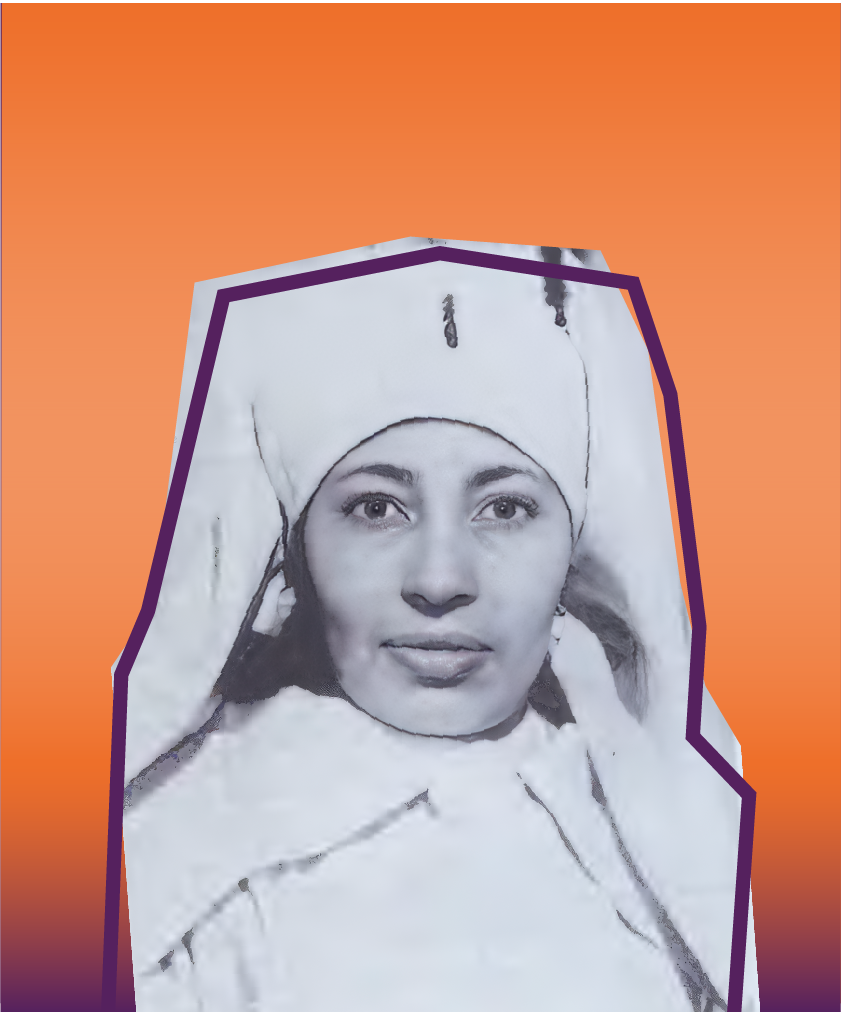
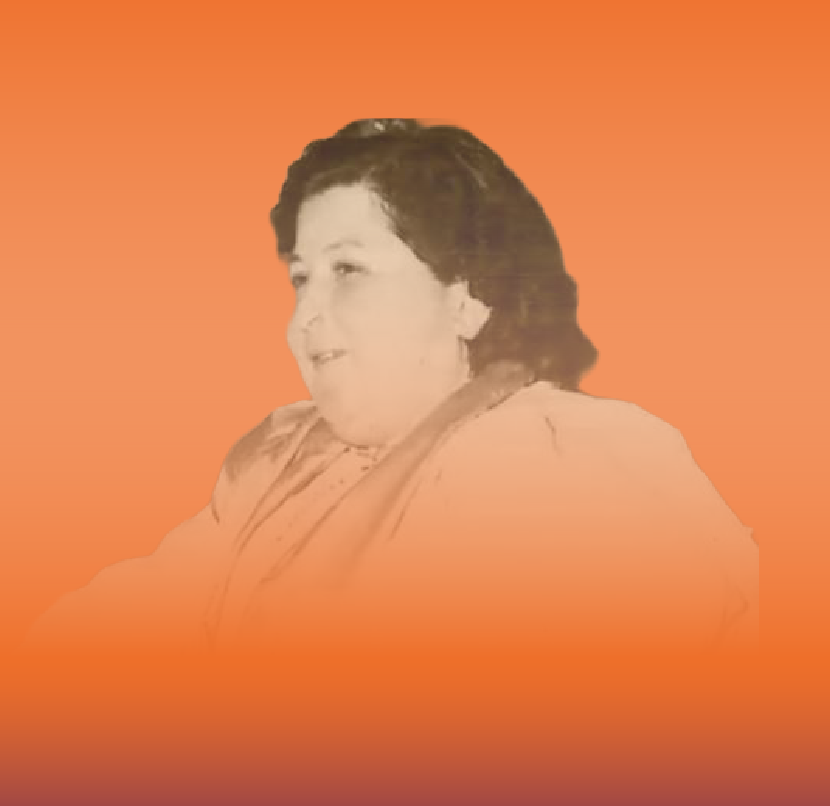
Her name began with a scar. Kharboucha, meaning “the scratched one” or “the scarred one”, was reportedly so called because smallpox had damaged the skin of her face (Glacier, 2013, p.128). But history remembers her for another kind of mark: the one her voice left on Moroccan memory. Known as Hadda Al Ghaitia, she was a poet, a Chikha, and a woman of resistance whose songs challenged Caïd Aïssa Ben Omar, one of the most feared men in the Abda region (1841-1924). In a world where women’s voices were expected to remain controlled, contained, or morally judged, Kharboucha made her voice impossible to ignore.
Her story belongs to the late nineteenth century, before the formal establishment of the French Protectorate in Morocco, which began with the Treaty of Fez in 1912 and ended with Moroccan independence in 1956. Yet Kharboucha’s life already reveals many of the tensions that would continue into the colonial and postcolonial periods: the control of bodies, the policing of women’s public presence, the suspicion directed at popular art, and the fear produced when poetry becomes political. She came from the Abda region, near Safi, and was associated with the Ouled Zayd tribe, whose revolt against Caïd Aïssa Ben Omar in 1895 became one of the most tragic episodes in the region’s history.
Kharboucha represents several struggles at once. She embodies the struggle of tribes against the Makhzen, or central power; the struggle of peasants against the tyranny of powerful elites; and the struggle of a woman artist against a man of authority. As Osire Glacier explains, she operated in the precise historical context of the nineteenth century, when many tribes were still fighting the central power in order to preserve their autonomy (Glacier, 2013, p. 128). Her story is therefore not only the story of an exceptional woman. It is also the story of rural Morocco resisting domination, dispossession, and humiliation.
The political context in which she emerged was especially unstable. After the death of Sultan Moulay Hassan I in 1894, his son Moulay Abdelaziz came to the throne at a very young age. Because of this, governance was placed under the regency of the vizier Ahmad Ben Moussa, known as Ba Ahmad (Glacier, 2013, p.129). Osire Glacier explains that Ba Ahmad used this moment to expand his power and privileges, while corruption and despotism spread across the country. Many tribes, already protective of their autonomy, rebelled against the Makhzen. In this climate, the rebellion of Kharboucha and the Ouled Zayd was not an isolated disturbance. It was part of a wider struggle over who had the right to control land, bodies, taxation, and community life.
To regain control over tribal spaces, representatives of central authority relied on powerful caïds. In the Abda-Doukkala region, this role was occupied by Aïssa Ben Omar, described as a brutal and feared caïd who accumulated wealth, monopolised resources, and imposed his authority across the region. His repression of tribes became a strategy of political ascension. He ordered the men of the Ouled Zayd to be disarmed, their lands confiscated, and their cattle and horses seized. This was domination in its most material form. It did not only silence people; it stripped them of the means to defend themselves, feed themselves, and live with dignity.
At the centre of Kharboucha’s legacy is the figure of the Chikha. In Moroccan culture, the Chikha is not simply an entertainer. She is a singer, poet, performer, and keeper of oral memory. She performs in public and semi-public spaces, often during weddings, celebrations, gatherings, and moments of collective emotion. Yet her visibility has always been ambivalent. Society needs the Chikha because she gives rhythm to joy, mourning, desire, and memory. But the same society often judges her because her voice, body, movement, and public presence disturb the moral codes imposed on “respectable” femininity.
This contradiction appears clearly in Hassan Aourid’s description of Chikhates: “Who does not know the Chikhates, those young women who brighten intimate evenings with their piercing voices, their sometimes light-hearted couplets and sensual dances, hair tousled, accompanied by the strings of a violin and the beat of a tambourine?” (Aourid, 2026). His words reveal how the Chikha is often viewed through fascination and condescension at once. She is invited, listened to, and needed, but she is also described through images of disorder, sensuality, and excess. The Chikha is present at the heart of social life, yet she remains marked as morally suspicious.
Mohamed Abdelouahed Rafiqi captures this paradox powerfully when he writes that the Chikha is “necessary, yet never fully integrated; accepted, but only on condition; visible, yet always subject to implicit surveillance” (Rafiqi, 2026). This sentence helps us understand Kharboucha’s position. The Chikha is necessary because society depends on her to sing its joys, sorrows, victories, defeats, and wounds. Yet she is never fully integrated, because the culture that consumes her art often refuses to recognise her as a legitimate cultural authority. She is visible, but watched. Accepted, but conditionally. Celebrated, but never entirely protected from judgement.
Kharboucha’s greatness lies in the fact that she transformed this fragile and surveilled position into a source of political force. She used Aïta , the Moroccan oral-poetic genre often translated as a “cry” or “call”, not merely to entertain, but to confront injustice. Aïta can be performed by one person or by a group, and is known for its powerful vocal expression and lyrics. In Kharboucha’s hands, Aïta became a weapon of memory and mobilisation. Her poems reportedly began by invoking God and the saints in a captivating voice (Glacier, 2013, p.129). They then called on the audience to feel the suffering caused by injustice and to act against it. This structure matters: her poetry moved from spirituality to political awakening. It made injustice felt before it made rebellion thinkable.
This is why her songs are historically important. They do not only express personal pain. They tell later generations about the political context of the time: the corruption of authority, the violence of local power, the suffering of peasants, the struggles of tribes, and the courage required to resist. In a context where official history often privileged rulers, male elites, and written archives, Kharboucha’s sung poetry preserved another archive: the archive of the rural, the rebellious, the wounded, and the feminine.
In 1895, when the Ouled Zayd rose against Aïssa Ben Omar, their revolt was not only military. It was also symbolic. They resisted exploitation and unequal taxation, but also humiliation. Kharboucha became central to that resistance because she gave it language, rhythm, and emotional force. Her songs praised the Ouled Zayd and denounced the despotism of Aïssa Ben Omar, to the point that her presence became essential in the tribe’s gatherings, ceremonies, and moments of mobilisation. She called on her people to refuse submission. She said: “I am free, and Aïssa’s money is not worth our freedom.” (Khodari, 2008, as cited in Glacier, 2013, p. 130). The meaning is clear: dignity cannot be bought, and freedom cannot be exchanged for survival under tyranny.
Her poetry also openly invited rebellion:
Let us rise in one rebellion
until we reach the gate of Si Qaddour (the caïd’s guard)
Let us rise in one rebellion
until we reach Bukshur (the well)
(Khodari, 2008, as cited in Glacier, 2013, p. 130)
These verses show that her art was not abstract. It named places, imagined movement, and called people into action. Kharboucha’s voice did not simply describe resistance; it helped produce it. This is why she became dangerous. Aïssa Ben Omar could confront armed men, but public ridicule sung by a woman threatened something deeper: his authority, his honour, and the fear on which his power depended.
The conflict ended in tragedy. Historical accounts describe the repression of the Ouled Zayd revolt and the event remembered as the year of Refsa (1895), when supposed negotiations turned into violence, massacre, imprisonment, and dispersal. In that moment, Kharboucha’s voice became inseparable from collective mourning. She was no longer only the poet of rebellion. She became a witness to the catastrophe. Her songs preserved what violent power attempted to erase.
Her gender made her defiance even more unsettling. Kharboucha’s challenge to Aïssa Ben Omar was political, but it was also deeply social and moral. She violated the expected silence of women. She entered public speech, mocked a powerful man, and mobilised men through poetry. Her threat was therefore double: she challenged the Makhzen and its local representatives as a member of a rebellious tribe, and she challenged patriarchy as a woman who refused invisibility. In a society where women’s honour was often tied to restraint, obedience, and controlled visibility, Kharboucha’s artistic presence disrupted the moral order.
This is also why her story speaks to the later colonial period. Under the French Protectorate, colonial authority did not invent surveillance, hierarchy, or moral policing, but it reorganised and intensified many forms of control. The Protectorate placed Morocco under French administrative, military, and political domination while often relying on local structures of authority. Popular culture, rural resistance, and women’s mobility all became sites of anxiety. The Chikha remained caught between use and suspicion: valuable as folklore, entertainment, and social ritual, but troubling when her voice carried criticism, memory, or unruly freedom.
Kharboucha’s final fate remains surrounded by uncertainty. Some say she was imprisoned and burned, others that her tongue was cut, and others that she was captured while trying to escape or seek protection. Osir Glacier (2013) gives a particularly violent ending: after the defeat of her tribe, Kharboucha was taken prisoner and sang her final struggle as a woman artist facing a man of power. According to this account, Aïssa Ben Omar ordered his men to torture her before burying her alive. During this torture, she is said to have sung:
This night is the night of torture.
Oh father, how I suffer.
But nothing is eternal.
The ultimate end is death.
Oh father, how I suffer.
(Khodari, 2008, as cited in Glacier, 2013, p. 131)
Because different versions circulate, what remains constant, however, is the meaning of the story: Kharboucha’s body could be captured, punished, or destroyed, but her voice could not be buried. The image of her singing under torture, whether treated as historical memory or symbolic truth, expresses the essence of her legacy.
Today, Kharboucha remains one of Morocco’s most powerful untold stories. She reminds us that art can be a political archive, and that the Chikha, often dismissed or morally judged, can also be a historian, critic, and rebel. Her voice unsettled power because it came from a place power underestimated: the mouth of a woman, the rhythm of popular songs, the space of performance. In remembering Kharboucha, we do not only recover the story of a Moroccan poet. We recover the history of tribal resistance, peasant struggle, female artistic defiance, and a society that needed the Chikha while refusing to fully recognise her.
Aïssa Ben Omar may have buried her body, but he did not bury her voice. Her songs continued to travel where official histories often failed to go: through memory, performance, women’s voices, and Morocco’s cultural imagination. Kharboucha’s legacy reminds us that resistance is not always written in manifestos or fought only with weapons. Sometimes, it is sung.
References
Aourid, H. (2026, May). Geishas, Hétaïres ou divas?. Zamane.
Glacier, O. (2013). Femmes politiques au Maroc d’hier à aujourd’hui: La résistance et le pouvoir au féminin. Tarik Editions.
Khodari, K. (2008). Kharboucha… Imra’at Al-Aita [Kharboucha… The woman of Aita]. Rabat: Imprimerie Al-Maarif Al-Jadida.
Rafiqi, M. A. (2026, May). Le poids de la morale. Zamane.

Related resources