

Malika El Fassi: Education, Independence, and Resistance
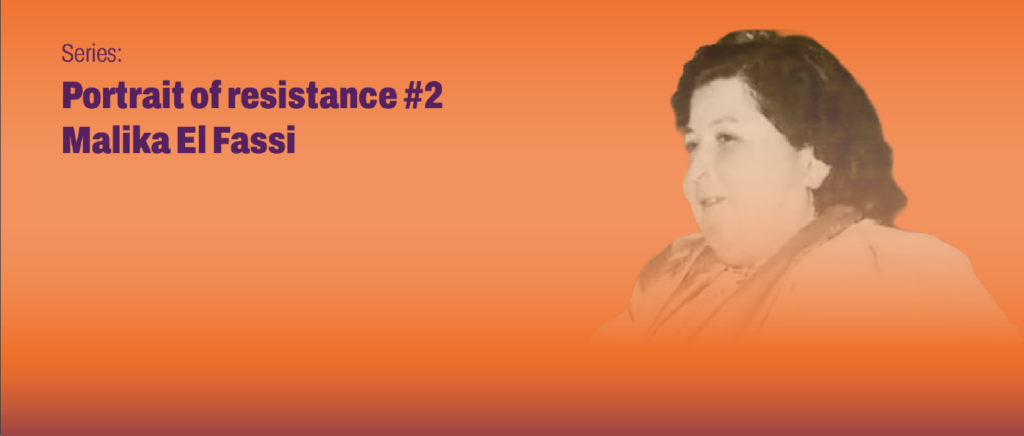
In the late 1920s and early 1930s, the historic city of Fez was a labyrinth of stone, shadow, and strictly guarded tradition. For the vast majority of Moroccan Muslim girls, the boundaries of the world were defined by the heavy wooden doors of their family homes. Puberty signaled a sudden, permanent withdrawal into domestic seclusion, where a girl’s education was limited to what old stories and domestic crafts could offer. Yet, behind one of these doors in the heart of the traditional bourgeois intelligentsia, a completely different reality was unfolding. Born into the prominent El Fassi family, young Malika grew up as the only girl in a lively household of brothers and cousins. Her upbringing was a rare anomaly in a country gripped by French colonialism and rigid social structures.
As detailed in Alison Baker’s book Voices of Resistance: Oral Histories of Moroccan Women Malika’s path shattered the norm purely by a stroke of fortune. In her own words, “That it was possible for me was mere chance.” (1998, p.63). Recognizing her sharp intellect, her father took her to a fqiha’s house [the female religious teacher's house] before establishing a private, rigorous school for her right at home, bringing in the region’s greatest scholarly minds to tutor her. Growing up in the twenties and thirties, Malika sat at the very epicenter of the developing Moroccan nationalist movement. By 1935, the young woman could no longer content herself with merely listening to the men of her household debate the future of their occupied nation. She began to ask a fundamental, unsettling question: why were women entirely missing from the fight?
Tormented by this absence, Malika took up her pen. In March 1935, Al Maghrib magazine published a piece titled "About Girls' Education." It was the first article ever written by a woman for the publication. Because a female voice in the public sphere was entirely unprecedented, she initially published under the pseudonym "A Young Girl," and later, "The City Researcher," (1998, p.64) leaving readers to fiercely debate whether the author was a man or a woman. Malika’s early arguments were carefully calibrated to navigate a deeply conservative society. She did not demand that women abandon the home; instead, she argued that the very survival and modernization of Morocco depended on educated mothers who could raise virtuous, self-confident men. As she forcefully wrote, “human society urgently needs women's contributions, and that women are one of the pillars of the renaissance, a firm foundation and a great majority of the nation, because they are the first teachers of our youth.” (1998, p.64)
As the 1940s dawned, Malika’s activism transformed from words into political steel. She understood that a nation trying to break the chains of colonial rule could not afford to leave half its population in the dark, asserting that “no real life is possible without knowledge, and no nation can progress as long as half of its people are ignorant.” (1998, p.73). When Princess Lalla Aicha graduated from primary school in 1943, Malika used the event as a national symbol to encourage parents to send their daughters to school. Yet, by 1947, a massive obstacle emerged: the French colonial apparatus only permitted primary schooling for Moroccan girls, completely blocking their path to secondary and higher education.
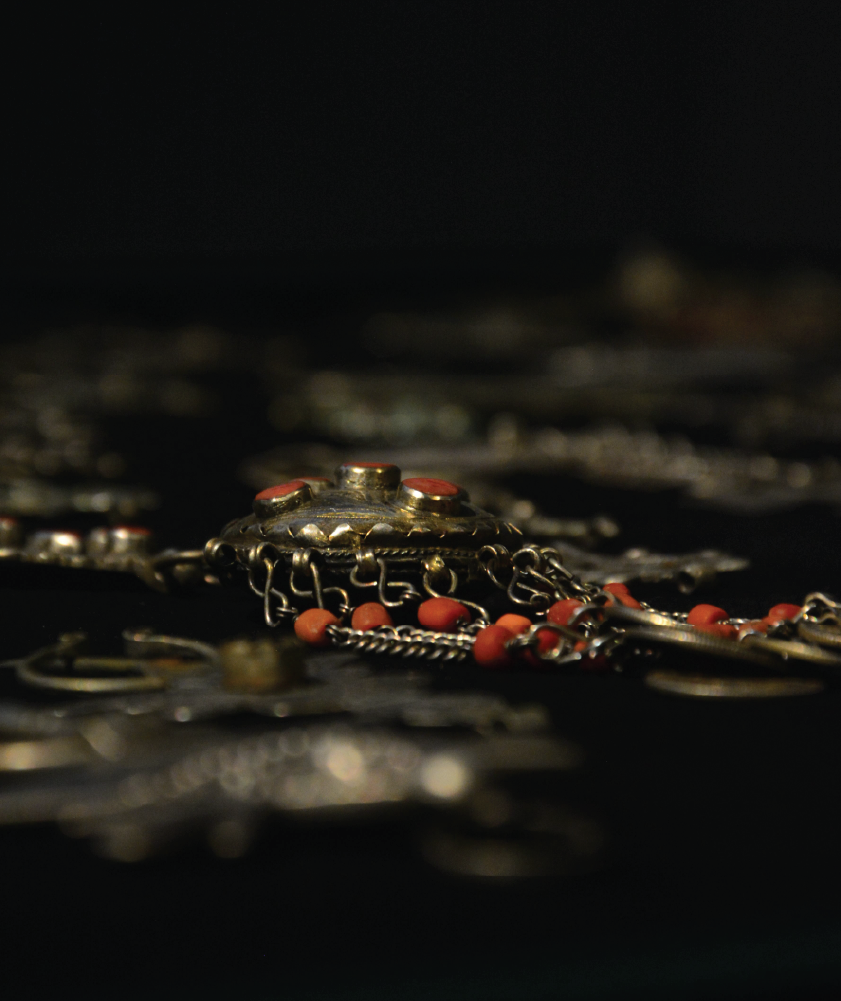
Malika refused to accept this artificial barrier. She envisioned a women’s branch of the ancient Qaraouine University in Fez—an idea she had fiercely protected since she was a nine-year-old girl being mocked by a traditional aunt. When the French authorities angrily rejected the proposal, claiming that the education of Moroccan women would be a "disaster," Malika and her networks bypasses them entirely. Operating under the conviction that “when women want to do something, they're serious; they move straight ahead without any zigzags,” (1998, p.74) she organized a grassroots financial campaign. Since the state would not fund the professors, Moroccan women stepped forward, sacrificing their gold belts, bracelets, and necklaces. This gold was sold to pay the Qaraouine professors’ salaries out of pocket, and a supportive father rented a house to serve as the campus. Within years, a hundred young women were successfully completing higher education, proving they could thrive just like their male peers.
Simultaneously, Malika had climbed into the sphere of the anti-colonial struggle. In 1937, she joined the national movement, eventually becoming the only woman embedded within the top-secret, select elite of the nationalist party that laid the groundwork for the 1944 Independence Manifesto. Her gender did not hinder her; her male peers treated her as an equal comrade in arms, bound by a shared, fierce nationalism. When colonial tensions reached a boiling point in 1953 and King Mohamed V was forced into exile by the French, Malika stepped into the vacuum of leadership.
During this perilous period, she was given the immense responsibility of directing the Istiqlal Party and coordinating the active resistance. In a brilliant subversion of patriarchal and colonial structures, she weaponized the traditional veil and djellaba to move through the streets entirely unnoticed by French intelligence, who dismissed her as an ordinary woman. On the eve of his exile, she had looked the King in the eye and given him a solemn, unbreakable vow: “Throughout the country, from north to south, until there are no more Moroccans left alive, we will carry on the struggle until you return!” (1998, p.77). She kept her word, guiding the party through years of brutal crackdowns, strikes, and protests. When the King finally returned to a free Morocco, she met him, removed her veil, and declared that women had fully played their role and earned their place in the sun.
When reading Malika El Fassi’s narrative today, it is essential to approach her legacy with both deep admiration and critical nuance. Structurally, her positionality highlights how closely early feminism was intertwined with class privilege. As a daughter of the bourgeois Fassi intelligentsia, her "accidental" education was an elite luxury; the structural barriers she broke were heavily mitigated by her family’s immense social and cultural capital.
Furthermore, how should we read the apparent friction between Malika’s radical actions and her conservative rhetoric? While her defiance of colonial authorities and her subversion of the veil for political espionage were undeniably revolutionary, her views present a more confounding matter: they explicitly rejected Western frameworks of "equality" and warned against women entering the workforce to avoid societal "clashes." If she viewed a woman's ultimate fulfillment as remaining tethered to domestic management and the socialization of children, are we witnessing a striking compromise with patriarchal values, or something more strategically calculated?
This tension forces us to interrogate the very nature of nationalist feminisms of this era. Did Malika fiercely liberate women from the confines of ignorance only to reinscribe them into traditional roles as domestic caretakers of the national identity? Or was this a necessary, protective negotiation—a defense mechanism to shield indigenous female empowerment from being branded as a colonial, Western imposition? Ultimately, her story pushes us to reflect on a broader, unsettling question: can a liberation movement ever be truly monolithic, or must it always perform this delicate, contradictory dance between radical defiance and conservative negotiation?
Crucially, these questions are far from settled; these very negotiations are actively happening today, vividly reflected in the work of a new generation of Moroccan feminists who continue to navigate, contest, and redefine the boundaries between inherited pioneer feminist frameworks, state structures, and their own pursuit of emancipation.
Reference:
Baker, A. (1998). Voices of resistance: Oral histories of Moroccan women. State University of New York Press.

Related resources