

Research Insights: Legitimacy as Survival and Political Practice in Queer Moroccan Activism
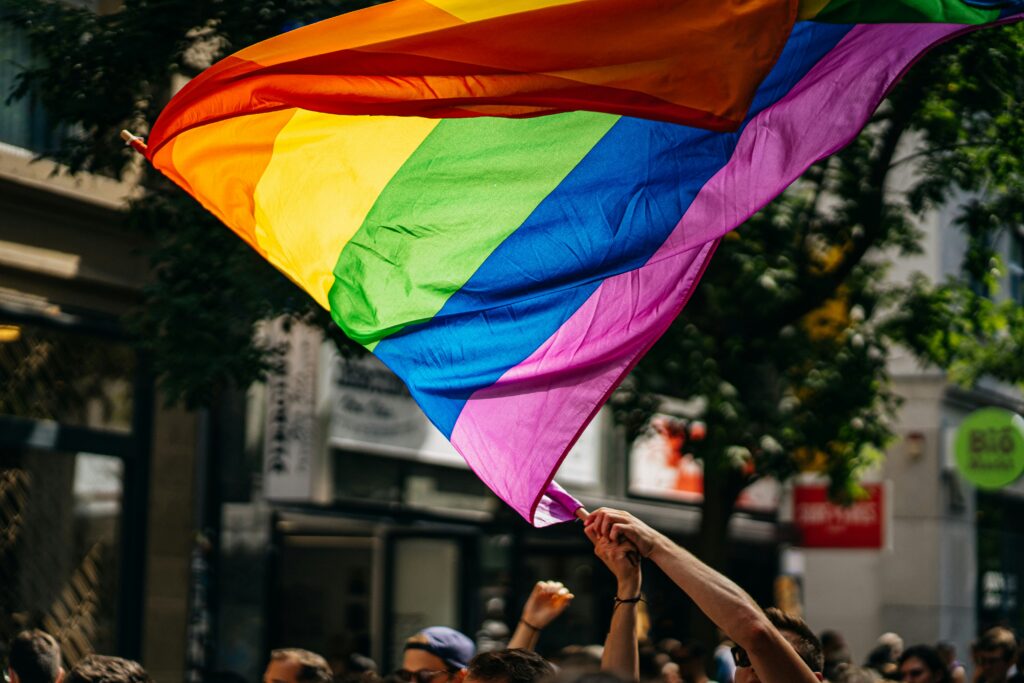
In "Who gets to speak for us? Legitimacy of queer activism in Morocco", Achary (2025) examines how LGBTQI+ and SOGIE activists construct and sustain legitimacy in a socio-legal context marked by criminalisation, surveillance, and persistent social stigma. Situating her analysis within Morocco’s restrictive legal framework, Achary argues that legitimacy does not arise from formal recognition but from everyday practices that enable survival, trust, and political agency under repression.
The study draws on a mixed-methods design, combining an online survey of 55 LGBTQI+ individuals in Morocco with five in-depth interviews with SOGIE advocates. Given the risks associated with criminalised identities, all data collection prioritised anonymity, encrypted communication, and non-identification. The survey, conducted in Darija, offers rare empirical insight into how community members perceive advocacy, representation, and safety, while interviews deepen understanding of activist strategies and dilemmas.
Achary situates this work against Morocco’s legal landscape, particularly Article 489 of the Penal Code, which criminalises consensual same‑sex relations. Survey results show that 89.1% of respondents are aware of Article 489, and 87.2% report feeling unsafe expressing their sexual orientation or gender identity. These figures underscore how legality structures everyday fear and constrains activism long before overt repression occurs. Visibility, the article shows, is ambivalent: necessary for advocacy, yet often triggering police intervention, public vilification, or violence.
One of the article’s central findings is that legitimacy operates along two interrelated dimensions: external legitimacy (public credibility, safety, and recognition) and internal legitimacy (representation, accountability, and trust within LGBTQI+ communities). Externally, advocacy groups struggle to gain recognition in a context where legal registration is nearly impossible and media representations are overwhelmingly hostile—90.9% of respondents describe Moroccan media portrayals of LGBTQI+ people as inaccurate or unfair. Internally, legitimacy is equally fragile: while 47.3% view LGBTQI+ advocacy as legitimate, 52.7% either doubt or reject that legitimacy, often citing classism, urban centralisation, donor dependency, or lack of tangible support.
The article highlights stark gaps between community needs and organisational capacity. Respondents identify psychological support (90.9%), housing and shelter (87.3%), and legal aid (85.5%) as urgent priorities. Yet 74.6% are not connected to any LGBTQI+ organisation, relying instead on social media and personal networks. These findings reveal legitimacy as materially grounded: trust grows not through visibility alone, but through the ability to respond to concrete vulnerabilities.
Importantly, Achary reframes legitimacy as both protective architecture and generative political space. Through community archives, artivism, digital security trainings, and care-based organising, activists produce what she terms counter‑discursive legitimacy—authority rooted in lived experience rather than state recognition. For human rights activism, this article offers a critical lesson: in repressive contexts, legitimacy is not granted; it is painstakingly assembled through care, critique, and collective endurance.

Related resources
Commentary- What Feminist Groups Want from the Moudawana Reform—And Why It Can’t Wait
31/05/2026

Beyond the Data: The Societal Tensions Revealed by Morocco’s 2025 Family Survey
15/04/2026
Building Resilience: A Practical Handbook for Mental Health in Crisis
24/03/2026
Commentary- What Feminist Groups Want from the Moudawana Reform—And Why It Can’t Wait
31/05/2026
Beyond the Data: The Societal Tensions Revealed by Morocco’s 2025 Family Survey
15/04/2026
Building Resilience: A Practical Handbook for Mental Health in Crisis
24/03/2026