


Beyond the Data: The Societal Tensions Revealed by Morocco’s 2025 Family Survey
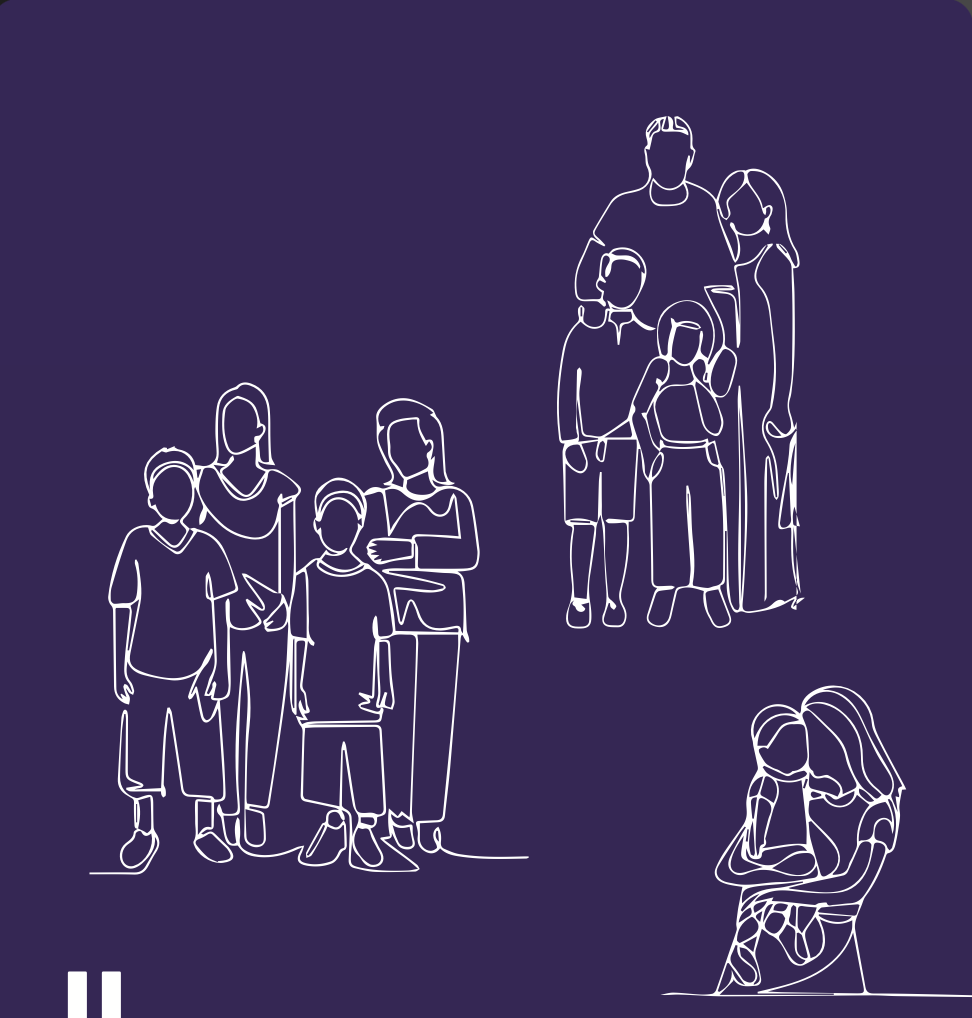
The 2025 Moroccan National Family Survey (ENF), the second edition following the 1995 survey, serves as a key statistical reference to update the diagnosis of the Moroccan family within a context of profound demographic, social, economic, and cultural transitions. The family occupies a central place in Moroccan society as the fundamental building block of the social structure, the primary agent of socialization, and the essential space for demographic reproduction, integration, and the weaving of bonds of affection, mutual aid, and solidarity. Beyond domestic life, it assumes vital socio-economic support functions and contributes to the intergenerational transmission of values, norms, and cultural practices, thereby ensuring the continuity of the social fabric. In the face of global transitions redefining lifestyles and cohabitation patterns, the family is called upon to consolidate its protective and supportive roles, acting more than ever as a social buffer against vulnerabilities and a preserver of family cohesion. This was clearly illustrated during the COVID-19 pandemic, where interfamily solidarity mechanisms intensified significantly, working alongside public social protection to provide decisive social resilience for many Moroccan households.
While remaining at the heart of social solidarity, the family is undergoing deep evolution driven by Morocco's modernization process, including urbanization, the extension of schooling, evolving lifestyles, and residential mobility. This leads to family configurations characterized by less cohabitation and a relative tightening of family bonds, without diminishing the family's central societal role. These transformations are further accentuated by overarching dynamics linked to digital transformation, labor market mutations, housing conditions, and evolving gender relations, which together are redefining the family model and giving rise to new perceptions, expectations, and values around family, solidarity, and the sharing of responsibilities.
A clear quantitative sign of this transformation is the evolution in household composition. The average household size has decreased from 4.6 persons in 2014 to 3.9 in 2024, now falling below the threshold of four persons per household. This trend signifies the progressive decline of extended cohabitation and the erosion of the family model based on the co-residence of multiple generations, in favor of smaller, more restricted domestic units and, consequently, more pronounced residential autonomy.
The objective of the ENF 2025 is to appreciate the evolution of the family's composition and organization, measure the effects on demographic, socio-economic, and cultural behaviors, and better document the transformations in adaptation mechanisms, solidarity networks, as well as the perceptions and expectations that are reshaping family equilibriums. It provides a factual foundation to inform public policy on family matters. The report of the first results is organized into thematic modules. It first examines family structure and household composition, the process of nuclearization, the persistence of the extended family, and the profile of family networks. It then addresses intergenerational relations and analyzes the forms of solidarity and mutual aid deployed within the family network, particularly among close relatives.
Subsequently, the report treats demographic behaviors, notably fertility, nuptiality, divorce, and single parenthood, along with related attitudes and perceptions. It illuminates their scope through the analysis of individual family pathways, considered through biographical data on matrimonial trajectories and residential mobility. Finally, the presented results extend to cross-cutting themes, covering the lived experience of the elderly, their living conditions and family support, intergenerational social mobility, family norms (doxa), and the impact of digital technology on family relations. The report details principal results at the national, urban, and rural levels, with a regional breakdown to be presented in a subsequent detailed report.
The survey's comprehensive analysis covers household structure and typology—including nuclear families, the rise of childless couples, single-parent families (monoparentalité), co-resident siblings, co-resident polygamy, extended families, and single-person households—and examines cohabitation patterns through the lens of the number of family nuclei. It maps family networks and close kinship circles, which are noted to be limited and centered on immediate kin. It studies the spatial configuration of the family, analyzing the geography of the family circle, residential distance, the frequency of in-person meetings and virtual communications, and the dynamics of family aid. The mechanisms of inter-family exchanges and solidarity are analyzed in terms of participating households, types of services exchanged, the close relatives mobilized, and the frequency of these exchanges.
Furthermore, the survey explores the relationship between family and employment, including support during unemployment, solidarity in self-employment, and participation in family businesses. It investigates marriage intentions among single people, motivations for marriage, reasons for refusal or indecision, and spouse preferences. For married life, it examines the marital structure of non-single women, the familial and social framework of marriage, initial residence conditions, and representations and criteria for choosing a spouse. Reproductive behaviors are detailed through fertility levels, the desire for additional children, reasons for refusing another child, contraceptive use, and reasons for non-use. The incidence, forms, causes, and consequences of divorce, including child custody and alimony, are covered. The report also utilizes biographical data to analyze family trajectories and pathways before age 36, and dedicates a chapter to the demographic characteristics of single-parent families.
A critical reading of these findings, however, reveals inherent tensions and potential challenges within this narrative of transformation. The report rightly celebrates the family's enduring role as a social buffer, a function proven during the pandemic, but this very strength can mask a potential policy risk: an over-reliance on informal family solidarity may inadvertently justify underinvestment in formal, state-led social protection systems, leaving vulnerable individuals—particularly the elderly, single parents, or those with weak family networks—exposed when familial capacity is strained. The documented shift towards nuclearization and residential autonomy, while emblematic of modernization, carries a dual edge. On one hand, it reflects rising individual aspirations and economic possibilities; on the other, it may erode the collective safety net that extended cohabitation provided, potentially intensifying pressures on the "sandwich generation" who must support both aging parents and their own children from a distance. The survey's focus on capturing evolving perceptions and values is crucial, yet it also highlights a societal crossroad: the move towards companionate marriage and shared responsibilities challenges traditional patriarchal structures, but without parallel progress in gender equity in the labor market and legal frameworks, this shift could create new forms of strain within households. Ultimately, the ENF 2025 provides an invaluable map of change, but its true utility lies in prompting difficult questions—not just about how the family is changing, but about whether public policy is evolving with sufficient speed and foresight to support these new, smaller, and more autonomous family units while ensuring that the vital safety net they provide does not become a source of unsustainable burden or inequality.

Related resources

Commentary- What Feminist Groups Want from the Moudawana Reform—And Why It Can’t Wait
31/05/2026


Research Insights: Legitimacy as Survival and Political Practice in Queer Moroccan Activism
02/05/2026
Building Resilience: A Practical Handbook for Mental Health in Crisis
24/03/2026
Commentary- What Feminist Groups Want from the Moudawana Reform—And Why It Can’t Wait
31/05/2026
Research Insights: Legitimacy as Survival and Political Practice in Queer Moroccan Activism
02/05/2026
Building Resilience: A Practical Handbook for Mental Health in Crisis
24/03/2026