

Framing the Forgotten: Dalila Ennadre’s Subjective Cinema and Feminist Archive
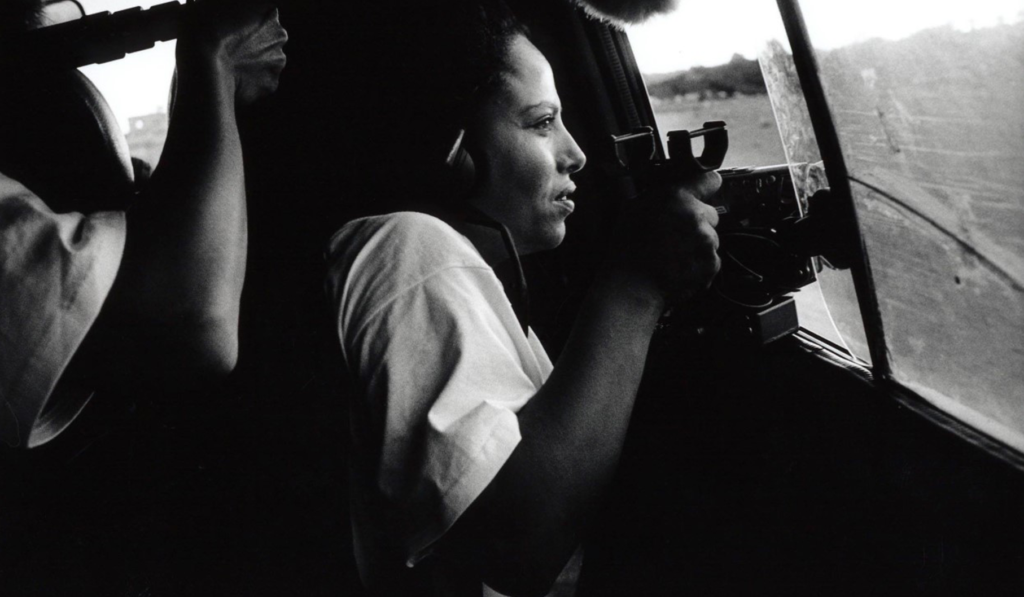
Dalila Ennadre’s work stands as a profound act of feminist engagement, not through manifestos or theoretical abstractions, but through an unwavering, intimate focus on Morocco’s most marginalised women. Born in Casablanca in 1966, and having grown up between Paris, Guyana, Germany, Morocco, and Canada, Ennadre brought a transnational perspective to her deeply localised subjects until her death in 2020. Her filmography is a deliberate political choice to centre the narratives of those society overlooks: the impoverished, the illiterate, the abandoned, and the resilient. She reframes these women not as victims, but as heroines—a term she literally embeds in the title of her breakthrough film, El Batalett (2000). This film, focusing on women in a Casablanca neighbourhood, exemplifies her method: it is a quiet, respectful observation that reveals the immense strength in daily survival, transforming domestic and economic struggle into a form of uncelebrated heroism.
Ennadre’s feminist commitment is deeply intertwined with her philosophy of documentary filmmaking. She explicitly rejects the notion of impartiality, arguing instead for a subjective, ethical honesty. This is not a detached reportage but a “permanent staging” of real life, where her authorial viewpoint is a tool for connection. In ‘Je voudrais vous raconter’ (2005), this approach likely allows her subjects—ordinary women—to own their stories, ensuring their reality is portrayed without the distortion of so-called “objective” editing. Her stance is a feminist one because it prioritises women’s own experiences as worthy of a dedicated, artistic frame, challenging both cinematic conventions and social erasure.
The context of her work in Morocco highlights the activist dimension of her filmmaking. She laments the lack of domestic financial support, relying on European channels, yet finds her most authentic audience in Morocco. The public’s reaction—feeling recognised, seeing their reality unadorned—confirms her work’s role in validating collective memory and experience. Her later work, such as ‘J’ai tant aimé’ (2008), which delves into the life of a prostitute, pushes boundaries further, exploring taboo subjects with the same empathetic lens. While she acknowledges a freer climate under King Mohamed VI, she remains pragmatically aware of limits, suspecting this film may not be broadcast. Nonetheless, her overall mission persists: to use documentary as a bridge, fostering understanding and dismantling fear. By safeguarding the diversity of Moroccan women’s stories, Ennadre’s films become essential archives of resistance and existence. They assert that in preserving the memory of these “forgotten ones,” society is forced to confront its complexities and, ultimately, to grow. Her engagement is thus a continuous, subtle revolution—one frame, one heroine, at a time.

Related resources