

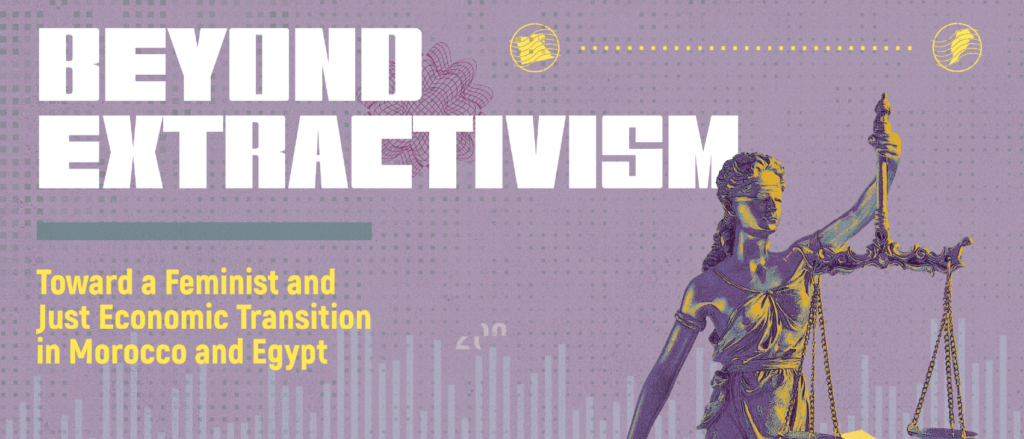

Beyond Green Frontiers: Unpacking the Unequal Costs of the Clean Energy Transition in North Africa
The report, "Beyond Extractivism: Towards a Feminist and Just Economic Transition in Morocco and Egypt," fundamentally critiques the European investment model in North Africa. It argues that current investments in resource and green energy projects often replicate exploitative patterns, prioritizing European energy security and export crops over genuine, sustainable development in the Global South. This approach, the report contends, deepens dependency and environmental harm in the very regions experiencing the most severe climate impacts.
Key Critiques and Findings:
- The "Mutual Benefit" Mirage: The report challenges the narrative of mutual benefit, arguing that investments in oil, gas, renewable energy (like green hydrogen), and industrial agriculture primarily serve Global North interests. Wealth and resources flow outward, while environmental costs and economic instability are borne locally.
- The 'Green' Facade: It questions the true intent of Europe's green energy push in North Africa (like green hydrogen), framing it less as solidarity and more as a strategy for Europe to secure its own energy and raw materials, replicating extractive patterns under a "green" label.
- The Human and Ecological Cost: The report details the tangible impacts: land degradation, water over-extraction, and loss of biodiversity from industrial agriculture and energy projects. This exacerbates resource scarcity in an already water-stressed region.
- Compounded Inequalities: The current model is shown to worsen gender inequalities and social disparities. Women often bear the heaviest burdens—through unpaid care work that increases as resources dwindle, or through low-wage, precarious jobs in export-oriented industries.
A Path Forward: In contrast to the extractive model, the report spotlights viable, community-centric alternatives. It advocates for a feminist, wellbeing economy that prioritizes local needs, environmental health, and resilience over endless extraction. This model champions grassroots movements and renewable energy projects designed for local benefit, not export.
Ultimately, the report calls for a fundamental reimagining of economic partnerships. It argues that true sustainable development requires moving beyond models that extract and export, toward economies that are regenerative, equitable, and rooted in the wellbeing of local communities and ecosystems. The alternative, a "wellbeing economy," is already being modeled in communities that prioritize local resilience over extraction.

Related resources
Portraits of Resistance – Fatna Mansar’s anti-colonial resistance
31/05/2026


Commentary- What Feminist Groups Want from the Moudawana Reform—And Why It Can’t Wait
31/05/2026

Research Insights: Legitimacy as Survival and Political Practice in Queer Moroccan Activism
02/05/2026
Portraits of Resistance – Fatna Mansar’s anti-colonial resistance
31/05/2026
Commentary- What Feminist Groups Want from the Moudawana Reform—And Why It Can’t Wait
31/05/2026
Research Insights: Legitimacy as Survival and Political Practice in Queer Moroccan Activism
02/05/2026