

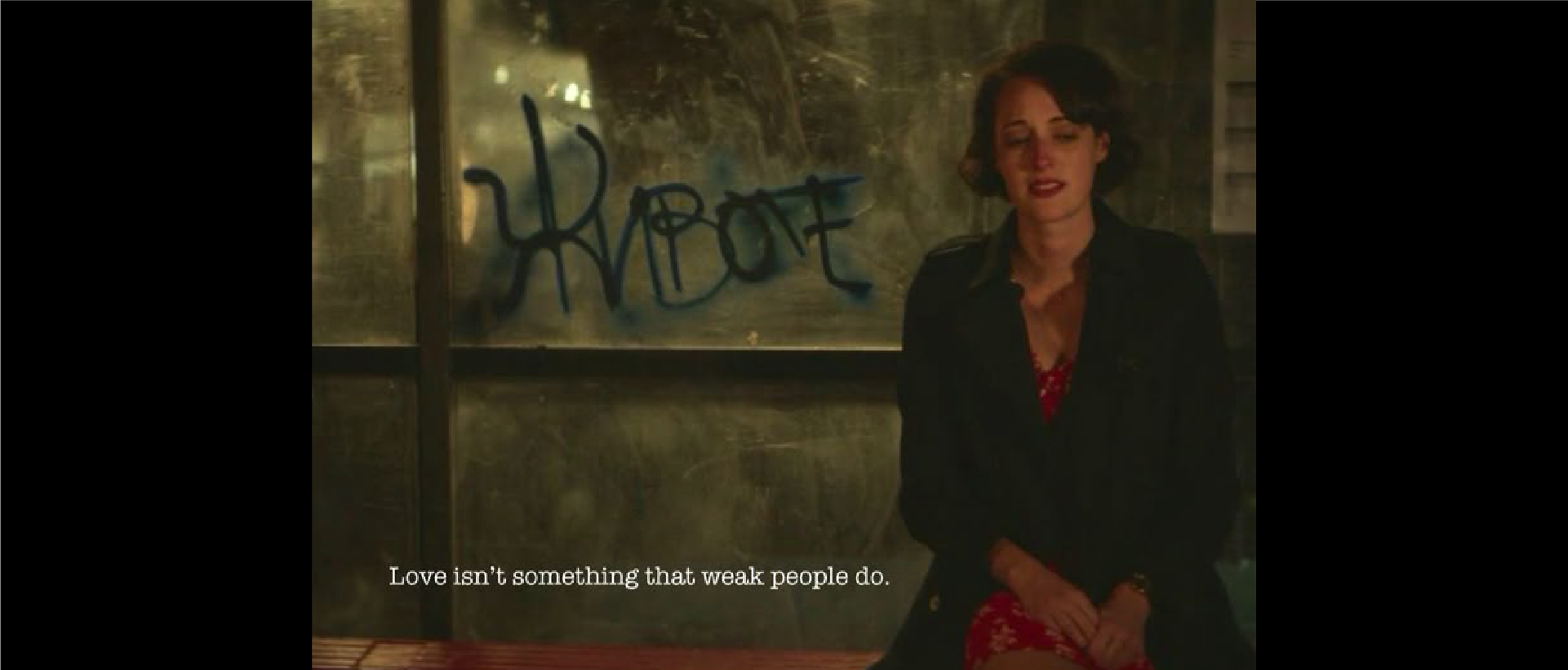

Reflection – Does the One Who Loves Win? Bell Hooks challenges the thought
The actor Ethan Hawke said: “The one who’s in love always wins… The sun doesn’t care whether the grass appreciates its rays, right? It just keeps on shining.” I must have replayed that clip a dozen times. On the surface, it’s a beautiful, almost stoic thought—that the act of loving itself is the reward, an internal victory that no external outcome can tarnish. It felt true in a quiet, personal way. It spoke to the part of me that has loved deeply and faced heartbreak, and wanted to believe that the loving itself wasn’t a waste. That part was, in fact, the whole point.
But it was only when I read bell hooks’ All About Love: New Visions, that I understood what that poetic truth could really mean, and more importantly, what it demanded of me. Hawke gave me a feeling; hooks gave me a framework, a challenge, and a call to action. His quote was the spark; her book was the fire it ignited, forcing me to examine not just how I love, but why, and for what purpose.
Hawke’s sun is a perfect, shimmering image for the kind of love hooks describes in her very first pages. She dismantles our culture’s obsession with love as a noun—a static feeling or a fairy-tale destination—and insists it is a verb. “Love is as love does,” she writes plainly. “It is ultimately about what we do, not just what we feel.” To be “the one who’s in love,” then, is not to be in a state of passive euphoria, but to be in a state of active practice. It’s about the daily, conscious choice to extend what hooks defines as the core ingredients: “care, affection, recognition, respect, commitment, and trust, as well as honest and open communication.” When Hawke says the lover “wins,” I now hear hooks’ definition of liberation. She argues that we live in a culture of profound “emotional trauma of lovelessness,” starved for genuine connection. To choose to love—to truly practice these ingredients—is to rebel against that scarcity. It is to decide, like the sun, to operate from a place of intrinsic abundance. You shine—you offer care, respect, trust—because that is your nature, your choice. The “win” is the integrity, the courage, and the profound sense of being alive that comes from that commitment. It’s a deeply personal empowerment.
But hooks, with her gentle yet unflinching clarity, immediately showed me that this beautiful ideal was incomplete. First, she introduced a concept that became my personal mantra: “Love is infinite yet bounded.” The sun in Hawke’s metaphor shines unconditionally, but human beings cannot—and should not—love that way if we want to survive with our spirits intact. To practice “care” and “respect” must include care and respect for oneself. hooks writes, “Love and abuse cannot coexist”. This was a revelation. I had often confused love with endless endurance, with tolerating disrespect or pouring myself into emotional black holes, believing that to withhold my “sunshine” was a failure of love. hooks corrected me. Boundaries are not the enemy of love; they are its prerequisite. “To know love,” she explains, “we have to tell the truth to ourselves and to others.” The truth sometimes is: I cannot extend affection or trust here anymore, because this environment is toxic to my core. Self-love isn’t selfish; it’s the foundation. I must protect my own flame to have any light to give at all.
This leads to the second, and most transformative, layer hooks adds. It’s captured in her devastatingly simple and profound thesis: “There can be no love without justice.” This is where the personal metaphor meets the political reality. A sun that shines serenely and indifferently over a landscape of oppression is not truly loving; it is passively complicit. Hawke’s quote, taken alone, could be used to justify a kind of spiritual bypassing—a focus on one’s own noble feelings while ignoring the suffering of others. hooks will have none of that. (Perhaps I’m pushing it with this parallel :p / aka : T7amest Chwiya! haha :p ).
She connects the intimate act of loving to the largest structures of power. We cannot claim to practice care, recognition, and commitment while upholding or ignoring systems that cause harm. She puts it bluntly: “The moment we choose to love we begin to move against domination, against oppression.” If I see a friend being mistreated, if I witness policies that strip dignity from marginalized people, and my response is merely to hold love in my heart, I have failed hooks’ test. “Honest and open communication” demands I speak up. “Respect” demands I fight for others’ right to exist safely. Love, in her vision, is kinetic energy. It must translate into action. It means using that light not just to warm, but to illuminate injustice, and to empower growth where it has been stifled.
I saw this everywhere once I understood it. That “parents’ rights” movement threatening trans kids? hooks would ask: Where is the care and justice for the child? Performative allyship that posts “Love is Love” but stays silent in hard conversations? That’s the gap between “the values they claim to hold and their willingness to do the work” that hooks critiques—a failure of true commitment. Her framework made my personal ethic coherent. To love my partner means to embody trust and respect by challenging sexist dynamics in our relationship. To love my community means the commitment to show up at a school board meeting. The “sun” must be an active gardener, tending to the soil of justice so all can grow.
So now, when I think back to Ethan Hawke’s lovely quote, I see it through the rigorous, compassionate lens of bell hooks. Yes, being “the one who’s in love” is a victory. It is the courageous, private triumph of choosing to live from an open heart, to actively mix those ingredients of care, affection, recognition, respect, commitment, trust, and honest communication in a closed world. But hooks insists the victory doesn’t stop at our own skin. The real, complete victory is dual: it is the internal practice of loving freely and the external, relentless work of co-creating a just world where that love can be received, reciprocated, and can flourish safely for everyone.
Her work concludes not with a wistful metaphor, but with a call to build. “Love is an action,” she reminds us, “a participatory emotion.” The sun doesn’t just be; by its nature, it makes life possible. hooks taught me that our love must aim to do the same—to actively nurture, protect, and fight for the conditions where every blade of grass has the right to reach for the light. That is the difference between a feeling and a force. Hawke named the feeling. hooks handed me the tools—the very ingredients—to become part of the force.
Bref, 9raw lketab
By MotsDits