

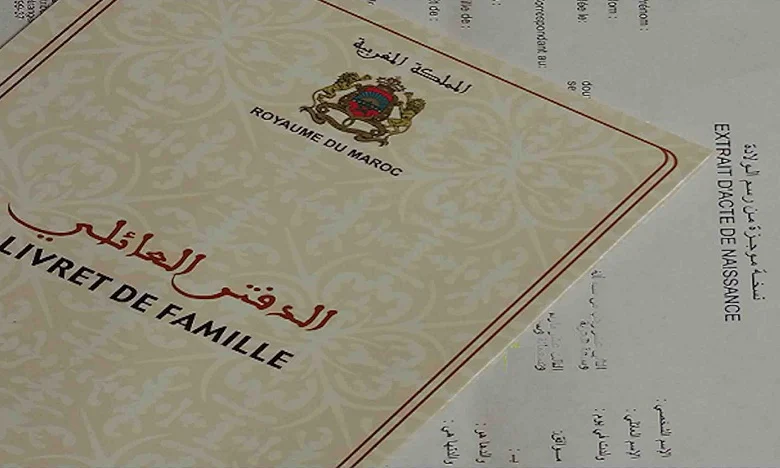

Civil Status and Legal Invisibility: Women as the Forgotten Citizen
In her paper “Les damnées de l’état civil” [The Damned of Civil Status], published by Égalité Mag, Dounia Z. Mseffer examines the deep social and legal consequences of exclusion from civil registration systems. From the outset, the title itself conveys a strong political message: those without civil status are not simply undocumented, but condemned to marginalization, reduced to what the paper describes as the “damnés” [damned] of administrative systems. This framing sets the tone for a critical analysis of civil status as a fundamental condition for legal and social existence.
Mseffer conceptualizes civil registration as more than an administrative procedure. Civil status defines who is legally recognized, who can claim rights, and who is entitled to protection. Without this recognition, individuals remain invisible to public institutions. The paper emphasizes that those without civil status are unable to fully “exister juridiquement” [exist legally], a condition that drastically limits access to education, healthcare, justice, and social services. Legal invisibility therefore becomes a powerful tool of exclusion rather than a neutral oversight.
A central argument of the paper is that civil-status exclusion is not gender‑neutral. Mseffer highlights that women are disproportionately affected, especially unmarried mothers, women in informal unions, and those whose family relations fall outside officially recognized frameworks. In such cases, civil registration becomes a moralized space where women are judged as much as they are administered. The paper underlines that women’s access to civil recognition is often mediated through marriage or male filiation, reinforcing structural gender inequality.
One of the most important contributions of the paper lies in its engagement with data. While Mseffer does not reproduce statistical tables or precise numerical percentages, she repeatedly refers to existing figures to demonstrate that legal invisibility is not anecdotal. As the subtitle of the paper clearly states, “Ce que les chiffres disent… et que la loi refuse encore d’entendre !” [What the numbers say… and what the law still refuses to hear!] This short but powerful sentence encapsulates the author’s position: available data already reveal the scale of exclusion, yet institutions remain unwilling or unable to act accordingly.
Mseffer argues that these figures expose a structural gap between law and reality. Although civil registration is formally guaranteed, the paper shows that administrative practices, procedural complexity, and social stigma regularly prevent women from accessing these rights. The data referenced in the paper contradict the assumption that civil registration systems function effectively for all. Instead, they reveal persistent patterns of exclusion affecting specific social groups, with women at the forefront.
The paper also demonstrates how legal invisibility is transmitted across generations. When a woman lacks civil status or cannot register a birth, children inherit the same administrative non‑existence. This intergenerational dimension reinforces inequality and undermines the promise of equal citizenship. Mseffer stresses that civil exclusion becomes “une spirale” [a spiral], reproducing vulnerability through time rather than resolving it. The absence of recognition thus functions as a mechanism of social reproduction.
Another key theme in the paper is the political responsibility of the state. Mseffer rejects the idea that civil invisibility results solely from individual failure or ignorance. Instead, she insists that it reflects institutional shortcomings and political choices. By ignoring what the data already reveal, public authorities contribute to maintaining systems that exclude the most vulnerable. The paper implicitly challenges states to confront the realities documented by their own numbers.
The consequences of civil-status exclusion, as described by Mseffer, extend beyond administrative inconvenience. Legal invisibility deepens women’s exposure to poverty, limits access to justice, and increases dependence on informal or unsafe arrangements. Without recognition, protection mechanisms remain inaccessible. The paper shows that the lack of civil status directly undermines the principle of equality before the law.
In conclusion, “Les damnées de l’état civil” [The Damned of Civil Status] presents civil registration as a feminist, political, and social‑justice issue. By grounding her analysis in documented figures and qualitative evidence, Dounia Z. Mseffer demonstrates that the problem is neither marginal nor temporary. The paper calls for serious institutional reflection and reform, insisting that equality cannot exist as long as legal existence itself remains conditional. Civil status, Mseffer reminds us, is not merely about paperwork—it is about recognition, dignity, and citizenship.
Source: Dounia Z. Mseffer, Les damnées de l’état civil, Égalité Mag